Wellbeing
Exploring timber, health and wellbeing
What happens when we stop measuring buildings by what they consume and start measuring them by what they support?
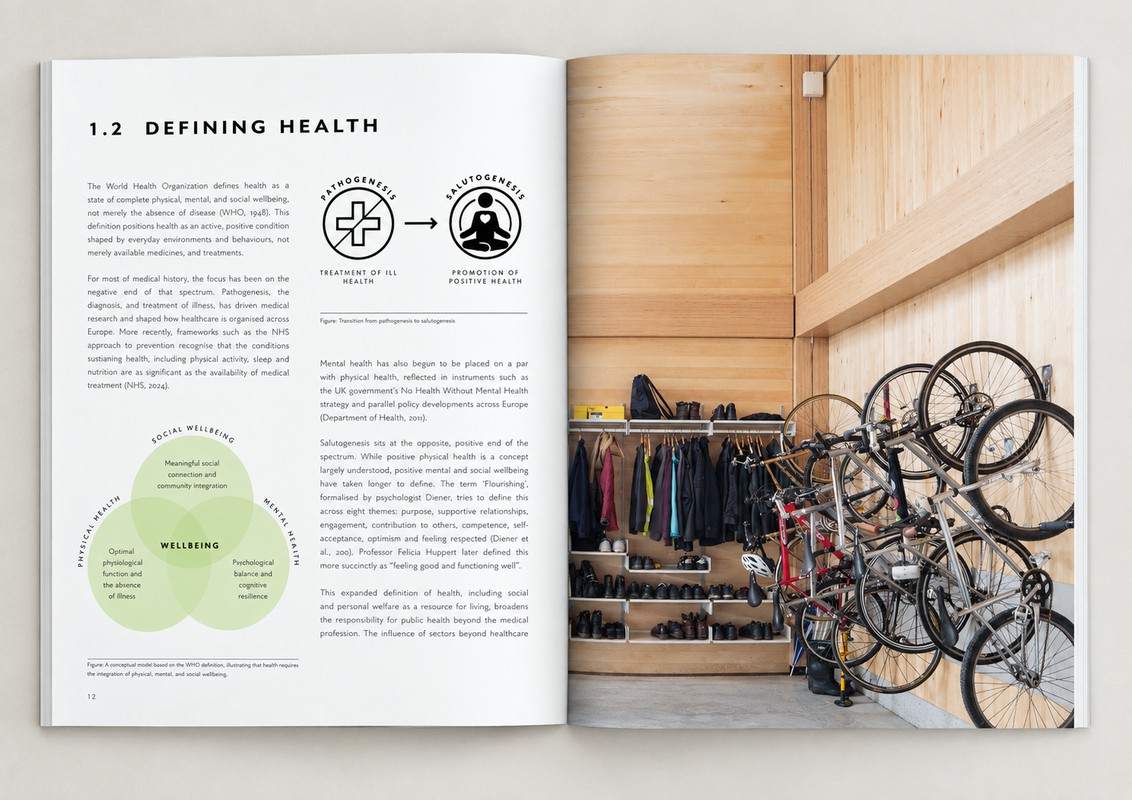
A growing body of research explores how the built environment can actively improve health. The pandemic reshaped our relationship with the spaces where we live and work, confirming what researchers have argued for decades: buildings influence both our physical and mental health. Today, this understanding is shaping policy, investment and design practice, while becoming an expectation of building users.
Timber is central to this emerging field of research. One of humanity’s oldest building materials, it is increasingly valued not only for its structural and environmental performance, but also for the way it shapes the experience of the people who inhabit timber buildings.
Current research suggests a promising link between timber and wellbeing, but the evidence remains fragmented. Most studies are small in scale and short in duration, making it difficult to draw definitive conclusions, but providing cues towards further investigation.
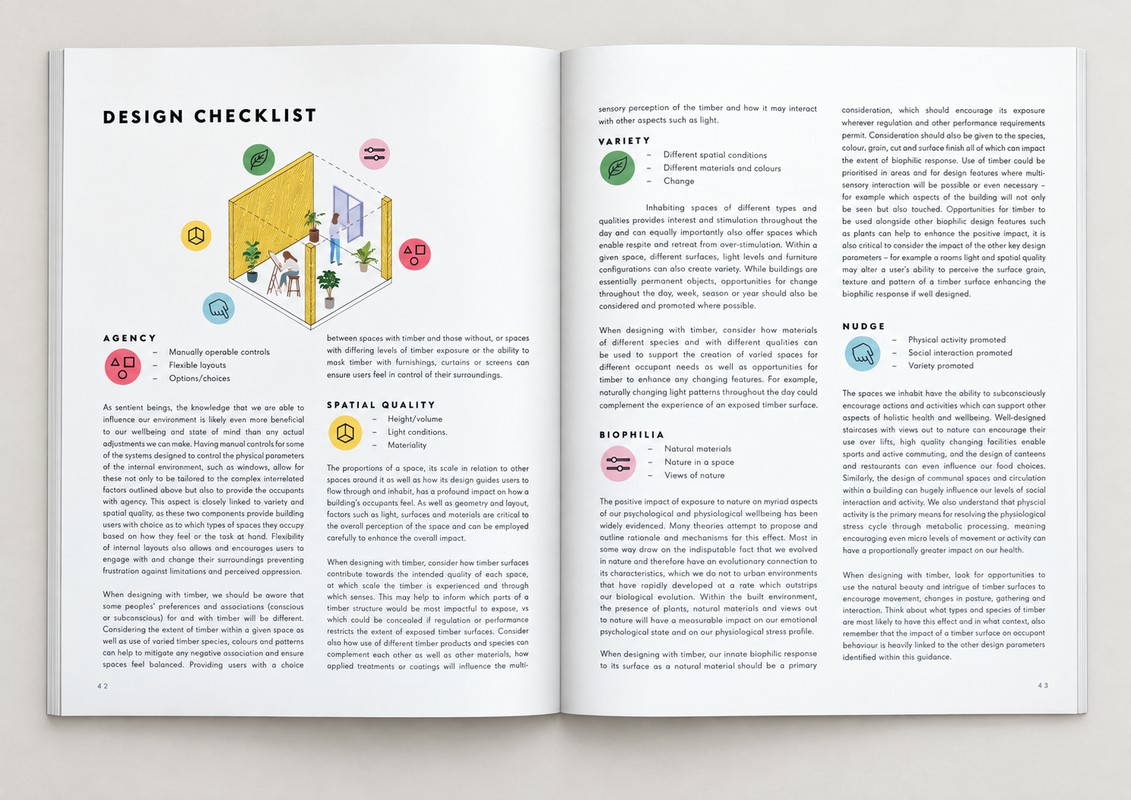
Our research into timber and wellbeing, co-funded by the EU as part of our Timberhaus research, looks to clearly define the principles of healthy construction and translate them into practical design guidance, integrating material choice, spatial and environmental considerations into a holistic design process that supports healthier buildings.
The study comprised a comprehensive literature review examining the relationship between the built environment and health with particular attention to the influence of timber.
The research evaluates theory to support the interpretation of secondary qualitative and quantitative evidence. Through this, we hypothesise that exposure to timber surfaces supports the long-term health and wellbeing of building occupants through multisensory stimulation. We propose psychological impacts are more pronounced than those of a physical nature, including emissions, temperature and humidity alongside perceptions of warmth and comfort.
It explores subjective experiences, including perceptions of warmth, comfort and cosiness, alongside the cultural factors that shape preferences for timber. It also examines objective measures, including emissions, volatile organic compounds (VOCs), temperature and humidity.
The findings are brought together in a summary report, which can be downloaded in its entirety here.